The demand for well-behaved, versatile dogs at home and in public has never been higher. As more people welcome dogs into their families and urban environments become increasingly crowded, owners are seeking dogs that are not only loving companions but also socially confident and obedient in a variety of settings.
While proper socialization and obedience training are strongly recommended for our beloved furry friends as pets, comprehensive training is mandatory for dogs as service animals.
Unlike traditional dog training that primarily focuses on basic obedience, full-service dog training addresses a dog’s behavior, socialization, specialized skills based on their handler’s needs, and excellent manners in public in a structured, ongoing process. The process is not only about teaching a dog commands, but about creating a long-lasting partnership, based on trust and respect.
In today’s article, we will explore what complete service dog training involves and how it can transform the relationship between dogs and their owners. We’ll also show how a comprehensive approach benefits both your dog’s behavior and your quality of life.
What Is Full Service Dog Training?
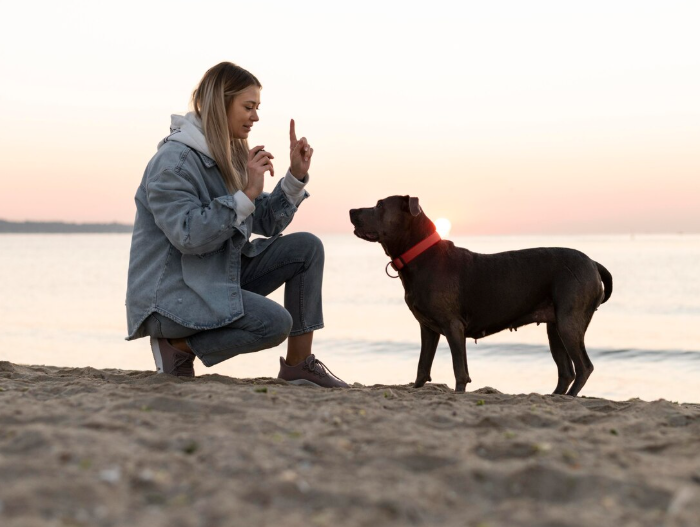
Full-service dog training takes a comprehensive approach to a dog’s development, which goes beyond basic obedience. Unlike traditional methods, which typically focus on a single component or address a specific issue, full-service dog training addresses all aspects of a dog’s needs, beyond basic obedience. The ultimate goal is for the dog to become a reliable assistant for their handler and learn to perform specific tasks that help them manage disability-related daily challenges.
Basic Obedience
Basic obedience is the foundation of comprehensive service dog training. Teaching commands like ‘sit’, ‘stay’, ‘come’, and ‘heel’ helps handlers establish clear communication with their dogs. Basic obedience also contributes to creating a clear structure and consistency in everyday life. Dogs thrive on routine as it means for them predictability, hence safety.
Basic obedience skills make it easier to manage excitement, prevent accidents, and ensure safe interactions both at home and in public. Training usually relies on positive reinforcement, and rewarding your dog when they respond correctly to encourage them to repeat the behavior.
Learning obedience commands also boosts your dog’s confidence and helps them feel secure because they know what you expect and can rely on your guidance. A solid foundation in basic obedience is essential for long-term success and reliability, especially when moving on to more advanced skills.
Advanced Obedience
Advanced obedience builds on basic commands and helps your dog respond reliably in various situations. This may include your furry friend following instructions at a distance, maintaining focus despite distractions, and exercising off-leash control so they can explore safely while still coming when called.
Training often focuses on skills such as holding a command for longer periods, responding from farther away, and managing unexpected distractions. These exercises help prevent risky situations, like running into traffic or approaching unknown animals. They also greatly contribute to enhancing handlers’ feelings of confidence and freedom.
Let’s not forget that advanced obedience also strengthens the connection between handlers and their paw friends, as communication becomes clearer. In turn, trust, mutual understanding, and respect also grow.
Overall, it provides your dog with the control and reliability needed for everyday life and prepares them for more specialized training.
Specific Service Dog Tasks
Specific task training is an integral component of service dog training. This is the main component that sets this training apart from companion animal training, which is primarily based on basic obedience and socialization.
Full-service dog training includes specialized tasks that are tailored to the handler’s specific needs. Service dogs are trained to perform tasks that help mitigate disability-related challenges in daily life. Examples of valuable service dog tasks include, but are not limited to:
- Retrieving items;
- Opening and closing doors;
- Turning lights on and off;
- Picking up and carrying objects;
- Alerting to medical conditions, such as too low or high blood sugar levels, seizures, cardiac issues;
- Guiding handlers safely through crowds or obstacles;
- Providing deep pressure therapy and other types of tactile stimulation for a calming effect;
- Interrupting repetitive and/or potentially harmful behaviors;
- Recognizing anxiety episodes and alerting to them, etc.
Training specialized tasks requires consistency, patience, and commitment to the process, as the dog’s actions directly impact the handler’s independence and safety. Service dog training programs are carefully structured and may include ongoing practice and assessments to ensure the dog performs tasks correctly in real-life situations.
By developing these specialized abilities, service dogs become highly capable partners who help their handlers navigate daily life with confidence and greater ease.
Socialization and Public Access Manners
Proper socialization is a crucial part of the service dog training process, which helps dogs feel confident and behave appropriately around other animals, people, and different environments. It’s highly recommended that socialization begins early- we would say as soon as the pup enters your home. It can continue throughout a dog’s life, gradually introducing them to new experiences, sounds, and situations.
Since socialization involves exposure to all types of situations and surroundings, it is closely linked to the public access manners portion of the training.
Teaching good manners in public is a key component in service dog training, which helps ensure the dog can behave calmly and politely in places such as shops, restaurants, public transport, and other busy areas. Public access skills include walking politely on a leash, staying composed around strangers, and ignoring distractions. These skills allow service dogs to accompany their owners safely and confidently, and also ensure they can reliably perform the learned tasks regardless of the situation.
Together, socialization and public access training reduce fear, reactivity, and overexcitement and foster calm and respectful interactions. Dogs who are well-socialized and have strong public manners are more adaptable and reliable, which, of course, makes life with them more enjoyable for their owners.
Core Training Techniques
Positive Reinforcement
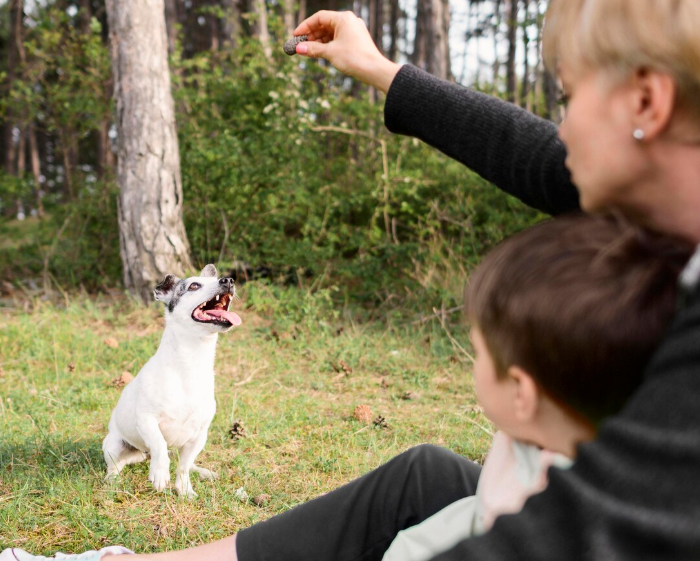
Positive reinforcement focuses on rewarding desired behaviors rather than punishing unwanted ones, which helps dogs learn more quickly and enjoy the process.
Rewards can include primary positive reinforcement tools like treats, as well as secondary ones like toys or play, depending on what motivates the dog. We will make a quick note here for those of you who are not familiar with the terms ‘primary’ and ‘secondary’ reinforcement tools.
Primary reinforcement involves rewards the dog naturally values, like food, water, or physical comfort, while secondary reinforcement involves things the dog has learned to associate with a reward, such as a clicker, verbal marker, or even praise and toys if the dog has been conditioned to value them.
By associating good behavior with positive outcomes, dogs are more likely to repeat those actions consistently. This method also helps strengthen the bond between the dog and their handler, as training becomes an enjoyable experience.
In summary, we’d say that positive reinforcement encourages confident and happy dogs who respond reliably to their handler’s guidance.
Clicker Training and Marker Signals
Clicker training and other marker signals provide a precise way to communicate with your dog. A clicker or verbal marker plays the role of a clear signal indicating that a specific behavior is correct. It helps the dog understand immediately why they’ve earned a reward.
This timing is critical here, as dogs learn best when they can connect the behavior directly with the reward. Marker signals can be used for a wide range of behaviors, from basic commands to complex service dog tasks.
They also help improve accuracy and speed of learning, because dogs quickly understand which actions are expected. Clicker/marker training is also particularly effective for shaping new behaviors and refining existing skills.
Consistency and Structured Routines
Consistency is essential for helping dogs understand what is expected of them and for developing reliable habits. Using the same commands, cues, and reward systems ensures your dog knows exactly what is expected in every situation.
Structured routines, including short but regular training sessions and predictable schedules, help reinforce learning and reduce confusion or frustration. Consistent handling also strengthens trust, as dogs feel secure knowing what to anticipate.
Even small changes in tone, timing, or responses can affect a dog’s learning. Maintaining a consistent structure is important for long-term success. Over time, regular routines help trained behaviors become reliable and automatic.
Problem-Solving Approaches for Behavioral Issues
Behavioral challenges are a normal part of training, and a thoughtful, problem-solving approach helps address them effectively.
This involves observing the dog, identifying triggers or behavioral patterns, and implementing strategies to modify unwanted behaviors. Techniques can include desensitization, counter-conditioning, or redirecting the dog to appropriate behaviors.
Patience and careful observation are key, since every dog reacts differently to training. By addressing behavioral issues step by step, handlers can reduce stress, prevent problems from getting worse, and create lasting improvements. This method helps meet both the dog’s needs and the handler’s goals in a balanced and supportive way.

How Can You Obtain a Service Dog?
There are several ways to obtain a service dog, depending on your needs, resources, and the time you can invest.
Through a For-Profit Service Dog Organization
One way to obtain a service dog is through a for-profit organization. These organizations typically provide fully trained dogs that are ready to assist their handler with specific tasks.
The advantage is that the dogs are usually trained to a consistent standard and matched carefully to the handler’s needs, which can help ease the transition when integrating the service dog into daily life.
However, the main disadvantage is the cost, since for-profit organizations often charge fees that are prohibitively expensive for many people. These can reach up to $20,000 to $30,000 and typically cover training, food, vet bills, and various supplies for physical and mental enrichment.
There
may also be stricter eligibility requirements and less flexibility in
customizing training for unique needs.
Through a Non-Profit Service Dog Organization
Non-profit organizations are another option for obtaining a service dog. They typically rely on donations and volunteer support, which can make the dogs more accessible financially or free of charge for eligible applicants.
Non-profits may also provide additional support and advocacy throughout the application and matching process.
Long waiting lists are one of the main drawbacks, which are usually caused by high demand and limited resources. Training standards and available breeds can also vary from one organization to another, which may affect the matching process.
While non-profits are a great option thanks to their lower costs, often limited to an application fee, applicants should be prepared for a longer wait and remain flexible with both timelines and dog selection.
Using a Professional Trainer
Another option is to have your current dog trained by a professional service dog trainer. This approach enables you to work on a personalized training plan that considers your needs as well as your dog’s abilities.
A professional trainer can offer structured lessons, clear guidance, and ongoing support to help ensure your dog learns the tasks reliably. It can take time, but the process is flexible and focused.
On the downside, you may need to work around the trainer’s schedule and possibly travel to their facility. The costs can also be quite high. They vary depending on where you live and the level of training required.
Training a Dog Yourself
Many programs and resources are available to guide handlers through each stage of the process, offering clear instructions and flexible learning options that fit their specific needs and lifestyle. These programs are typically well-structured, easy to follow, and include full tutor support, which can be especially helpful when questions or challenges come up along the way.
This method is well-suited for people who not only want to be directly involved in their dog’s training but also strive to build a strong relationship with their paw friends, based on mutual trust and understanding.
However, you should keep in mind that training your own dog as a service dog requires patience, consistency, understanding your furry friend, and finding the right approach for them. This is a long-term goal, and managing drawbacks together as a team is part of the process.
What to Consider?
Time Commitment
Training a service dog is a long-term process, so it’s important to be realistic about the time you can dedicate each day. Progress usually requires consistent practice, regular repetition, and exposure to different environments.
Rushing the process often leads to gaps in skills or confusion for the dog, so remember that patience is essential.
Before starting, it would be helpful to look honestly at your schedule and decide whether you can maintain regular training sessions. Even short, daily practice can make a big difference when done consistently.
Progress and Milestones
Every dog learns at a different pace, which means that progress may not always follow a straight line. Some skills will come quickly, while others may require more time and reinforcement.
That said, it’s important to set small and achievable goals, which will help keep both you and your dog motivated. Remember to celebrate progress, even the small steps! This will help maintain your and your dog’s confidence.
It is also normal to revisit skills as the dog matures or faces new distractions.
Practice and Maintaining Skills
It’s essential to remember that training doesn’t end once a dog has learned a task.
Service dogs need ongoing practice to keep their skills sharp and reliable in all environments. Regular follow-up sessions help reinforce previously learned tasks, and practicing in new places will keep your dog confident and adaptable. Consistency and patience are key to maintaining long-term success.
The Dog’s Individual Characteristics
Every dog is different, with their own personality, learning style, and energy level, and all these factors affect how training should be conducted.
Some dogs are confident and curious, while others may need a gentler, slower introduction to new experiences. A dog’s breed, age, and temperament also play a role in how quickly they learn and how they respond to distractions.
We encourage service dog handlers to pay attention to their dog’s unique traits and adjust training accordingly. Tailoring your approach to fit your paw partner’s needs is often the most effective way to achieve steady, lasting progress.
Adapting the Training Plan
No training plan should be one-size-fits-all. As you learn more about your dog’s strengths and weaknesses, it’s normal to make adjustments along the way.
Some tasks may require extra practice or more time, while others might need a different approach entirely. Staying flexible and responsive will help reduce frustration for both you and your dog.
A well-adapted plan can help you and your dog make steady progress
while strengthening your bond.
Training a service dog is a long-term commitment that requires patience, consistency, and understanding of the dog’s individual needs. By carefully considering your options and following a structured approach, you can turn your beloved furry friend into a reliable partner. With time and practice, this partnership can make daily life safer and more enjoyable!