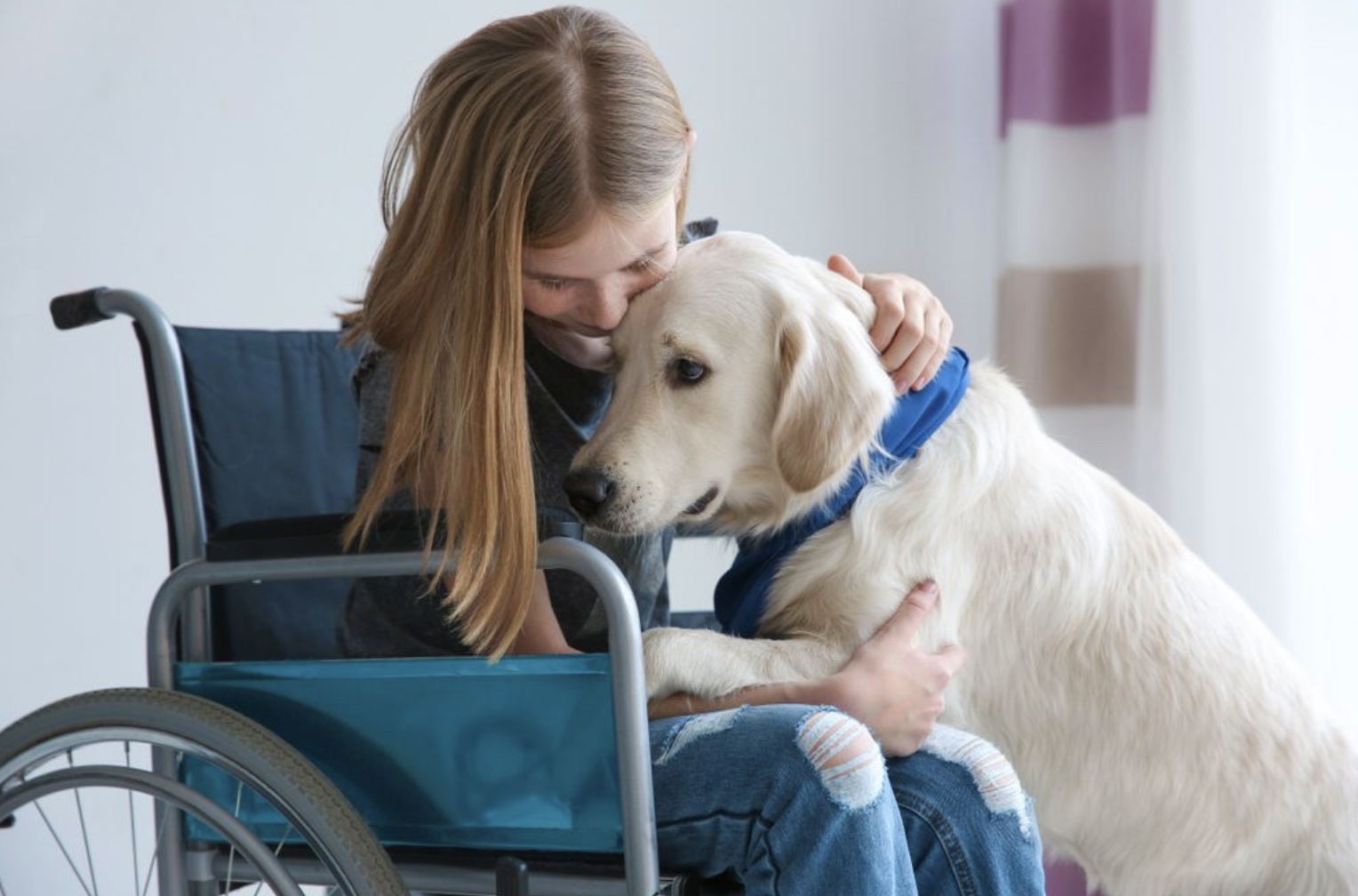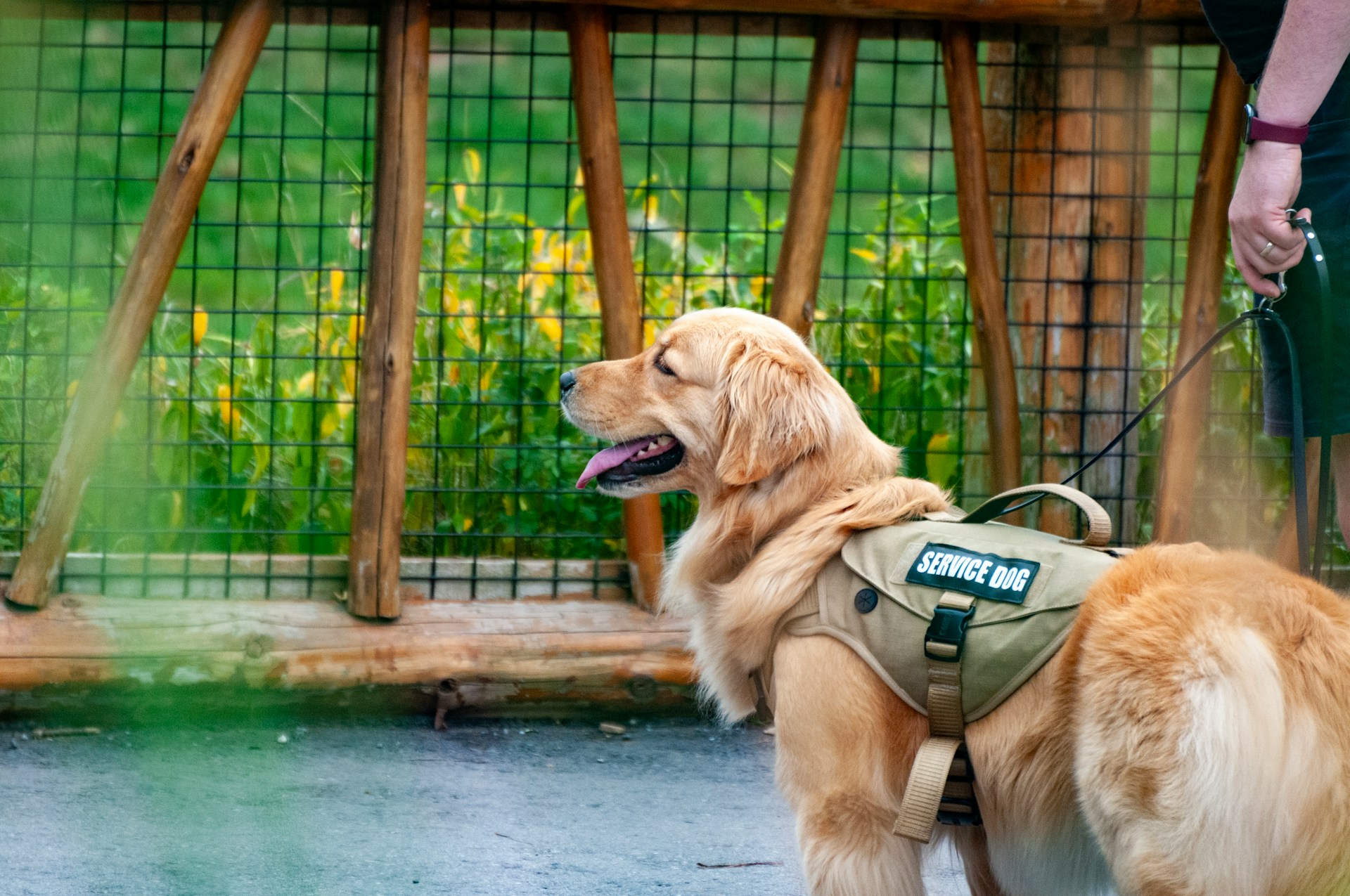
Assistance Dogs are specially trained dogs that have one or more skills that directly contribute to the improved quality of life of their users. They help them with their daily activities, keep them safe by alerting to medical emergencies, and improve their independence. Although this description does not encompass everything we can say about assistance dogs, it is a good starting point to understand the impact that a fully trained assistance dog can have on a person's life.
If you are not familiar with the term "Assistance Dog", then you might have heard the term “Service Dog”. That term means basically the same thing, but it is mostly used in North America. Conversely, the term "Assistance Dog" is more widely used in Europe. Fun fact: Both terms are used interchangeably in Australia.
In this article, we will talk about the legal framework established in the Republic of Ireland for assistance dogs. Hopefully, we can help you determine if you should invest the time and effort into adopting and using an assistance dog.
Who Is Eligible for an Assistance Dog?
If you are a disabled citizen, you qualify for using a service/assistance dog. However, it is important to understand that an assistance dog is not a good fit for every disabled person, and a consultation with a medical professional is necessary to evaluate the suitability of an assistance dog for a particular health profile and living arrangements.
The candidates eligible for using an assistance dog broadly fit the following requirements:
1. Visual and Hearing Impairments
People with legal blindness or significant loss of sight. Additionally, people who are profoundly deaf or hard of hearing require sound-alerting support.
2. Physical and Mobility Disabilities
Individuals with mobility challenges who need help with tasks such as opening doors, retrieving dropped items, or balance support. People in wheelchairs can also use mobility aid dogs.
3. Neurological and Medical Alert Needs
People with epilepsy or seizure disorders who need a warning of oncoming seizures. Additionally, individuals with diabetes may require a dog to detect and alert them to dangerous blood-sugar fluctuations. Also, we can add to this group people with cardiac issues, who may benefit from an early warning of low and high blood pressure.
4. Neurodevelopmental and Psychiatric Conditions
Children and adults on the autism spectrum who benefit from social, sensory, and safety-oriented support. People who have experienced traumatic events, people with severe phobias, and people with behavior disorders can have a significantly better quality of life if they use an assistance dog.
Being an assistance dog handler is a full-time commitment and a major change in lifestyle that will require adapting to the dog's needs. Many assistance dog users may need help from a caretaker, a family member, and professional medical staff, too. While an assistance dog can be an excellent aid in developing social skills, boosting independence, and helping with health conditions, you should not forget that you are part of a bond that goes both ways. Caring for an assistance dog comes with a lot of responsibilities, and navigating public spaces is a lot different.
Anyone who is going to use an assistance dog must demonstrate the capacity to care for their welfare responsibly. If you are going to work with a charity to have an assistance dog trained for you, please keep in mind that many of these organizations require the individuals paired with the dogs to live within the service area of an accredited charity. Minors require parental/guardian consent and a signed co-responsibility statement when working with charities.
Are Assistance Dogs Allowed in Shops and Restaurants?
The Food Safety Authority of Ireland says:
Access to customer dining areas of restaurants and bars could be permitted by the food business at its discretion, provided that:
- such access to customer dining areas is considered within the food safety management system in operation in the food business;
- the dining areas are monitored;
- all reasonable effort is taken to ensure that food cannot be contaminated;
- dogs and other pets are kept under the control of the owners;
- proper procedures are in place to deal with any contamination of the premises.
Retail food businesses that prohibit companion animals should make an exception for guide dogs and assistance dogs.
Assistance dogs are allowed into shops as long as they do not interfere with the merchandise and do not pose a risk to the safety of the other customers. The Equal Status Acts 2000–2018 prohibit shops and all service providers from refusing entry or charging extra for a person with an accredited assistance dog.
The Acts apply to people and businesses who:
- sell a wide variety of goods;
- use or provide a wide range of services;
- obtain or dispose of accommodation;
- attend at, or are in charge of, educational establishments.
Irish equality legislation gives Assistance Dog owners the right to access businesses and services without discrimination. This includes access to:
- all forms of public transport, including bus, train, tram, taxi, Uber, plane, or ferry;
- all forms of hospitality accommodation, such as hotels, Airbnb, hostels, or rental properties;
- all establishments that provide food, including cafes, restaurants, pubs, delis, and supermarkets.
Unlike pets, assistance dogs are considered low-risk for food contamination. Even in shops that sell food, businesses must accommodate them, implementing routine hygiene controls rather than outright bans. Please, keep your assistance dog clean, well-groomed, on a leash, and under supervision when visiting public spaces.
Are Assistance Dogs Allowed in Schools?
Assistance dogs have full access rights to all educational establishments in the Republic of Ireland, including primary and secondary schools. Service providers, such as schools and universities, are required to do “all that is reasonable” to accommodate the needs of a person with a disability by providing special treatment or facilities where, without them, it would be impossible or unduly difficult to avail of the service.
While this may sound a bit vague, we encourage you to talk to the management and the assigned special care office for your educational institution, and try to find an adequate and reasonable path to accommodate an assistance dog user. Refusing to admit a properly trained assistance dog to a school or imposing extra charges or conditions would be unlawful under Irish equality law.
If you feel like the conversation with your school or university is plagued by a lack of understanding, empathy, and reasonable adjustment, you have the option to seek help from the Irish Human Rights and Equality Commission.
Their contact page can be found at: https://www.ihrec.ie/contact-us
Address: 16-22 Green Street, Dublin 7, D07 CR20
Email: info@ihrec.ie
Reception Phone: 01 8589601
The reception phone line is open Monday to Friday from 10.30am-12.30pm and 13.45pm-3.15pm.
If you have been discriminated against, the Commission may assist you with legal proceedings. Before you ask for IHREC’s assistance, you must seek legal aid via an attorney or a solicitor.
Who Is in Charge of the Training of Assistance Dogs?
In the Republic of Ireland, it is legal for a dog owner with a disability to train their pet dog to become an assistance dog for themselves. There is no statutory prohibition against a private individual training their own dog to perform disability-related tasks. In practice, however, owner-trained dogs cannot secure formal “service dog” status unless that training is independently assessed and the animal is registered with an institution.
For example, the courts in the Republic of Ireland welcome assistance dogs as long as they are fully trained and registered with one of the following, or a U.K. or other international equivalent:
• Irish Guide Dogs for The Blind
• Dogs for the Disabled
• Autism Assistance Dogs Ireland
• International Guide Dog Federation
• Canine Partners (UK)
• Dog A.I.D. (UK)
• Guide Dogs UK
• Hearing Dogs for Deaf People (UK)
• Medical Detection Dogs (UK)
• Support Dogs (UK)
The same policy appears to be adopted by educational institutions like Trinity College Dublin and Dublin City University.
Individuals can also work with a dedicated training facility. As you may guess, a blind person can not train their own dog to be a Guide Dog. However, a person with diabetes can self-train their dog to pick up changes in their scent and alert them to low and high blood sugar levels.
You might want to see the online Diabetic Alert Service Dog Course from the ServiceDog Training School International. They also offer courses for Seizure Alert and Cardiac Alert Service Dogs. The courses are owner/self-trained and can be done entirely online.
You may also want to review the article: Is It Possible to Get a Diabetic Service Dog for Free? Here’s How
If you prefer to work with a local training facility in Ireland, then you may want to reach out to:
Irish Guide Dogs for the Blind
https://www.guidedogs.ie/about/contact
Address: Carrigrohane, Model Farm Road, Co. Cork, T12 WT4A
They can help with training Guide Dogs for the visually impaired, Assistance dogs for autism, and other disabilities.
Irish Dogs for the Disabled
https://dogsfordisabled.ie/contact-us
Address: Summerlea House, Togher Road, Cork, T12 E264
They can help with training Mobility Assistance dogs for adults and children.
Autism Assistance Dogs Ireland
https://www.autismassistancedogsireland.ie/how-we-help/assistance-dogs/
Address: 18a Euro Business Park, Little Island, Cork
They offer Service Dogs trained specifically for children on the autism spectrum.
Canine Therapy Ireland
https://caninetherapyireland.com/faqs
Address: 4 Aylmer Drive, Courtown, Kilcock, Kildare
The help with training Psychiatric Assistance Dogs.
My Canine Companion
https://www.mycaninecompanion.ie/contact
Address: Unit 1 Cregane Industrial Estate, Station Road, Buttevant, Co. Cork, P51 WTK5
They can help train Autism Assistance Dogs, Therapy Dogs, and Companion Dogs.
What Documentation Is Expected From Assistance Dog Users?
Service Dog owners are expected to be able to provide sufficient documentary evidence that their dogs have been trained, are healthy, safe to be around, and have been properly trained.. In instances where the assistance animal is not wearing an identifiable harness or branded lead, staff members may seek clarification that the animal is a trained and registered with a local training facility or an equivalent intentional body.
We recommend you keep on hand: an identification card for your dog, a copy of their certificate for completed training, and a signed medical letter that attests to your legitimate need for an assistance animal. It is best for the card and the certificate to be easily verifiable online. The medical letter must feature the contact details of your primary care doctor. However, the letter does not have to disclose details about your health profile.
Assistance dog handlers in Ireland may want to carry a portfolio of official documents and visible identifiers to confirm their dog’s status. When asked by a service provider (shop staff, school administration, hotel reception, taxi driver, etc.) they may be asked to present any of the following items:
Assistance Dog ID Card
This is typically issued by a training facility, evaluation body, or international training service provider.
Branded Harness, Leash, or Jacket
A distinctive working-dog harness, cape, leash, or jacket marked with an organization logo that serves as immediate visual confirmation of accreditation.
Registration Certificate (where provided)
A certificate or letter from the training organization or evaluation body confirming the dog is fully trained, has complete public access training, and the date of their completed training.
Handler Information Sheet or Welcome Pack
Some charities supply a short leaflet outlining the dog’s rights under the Equal Status Acts 2000–2018 and a brief guide for staff on interacting with an assistance dog.
For example, training records or veterinary health certificates may be carried for the dog’s own welfare or to meet organizational requirements, but they are not required by law to gain public access. You are also not legally required to provide any medical records to a business to support your use of an assistance dog.
If you are serious about getting an Assistance Dog, we recommend reading our guide. We hope this article is informative and can help you understand the rights and obligations of an assistance dog team.