The reports of dog attacks in the UK have been on the rise since 2018, with more than 30,000 reports in 2024, according to an article by the BBC. No dog owner wants to see their pooch initiate an attack or respond to one. The issue of dog aggression is very divisive, and so fa,r the UK government has not found an agreeable solution. It is vital to learn how to handle a dog attack and stay safe in such situations. We hope this article helps you be better prepared.
What Are the Common Reasons for Dog Attacks?
Dogs usually bite for reasons that make sense to them, not out of spite. Fear is one of the biggest triggers. A dog that feels cornered, surprised, or threatened may lash out to protect themselves. Pain or illness can also make a normally calm dog snap because they are uncomfortable or confused. Resource guarding, such as protecting food, toys, a bed, or a person, can lead to aggressive behaviour when another animal or person gets too close. Poor socialisation or training can cause a dog to misread human signals or other animals and react defensively. Sudden movements, loud noises, or someone running can trigger a chase or defensive response in some dogs.
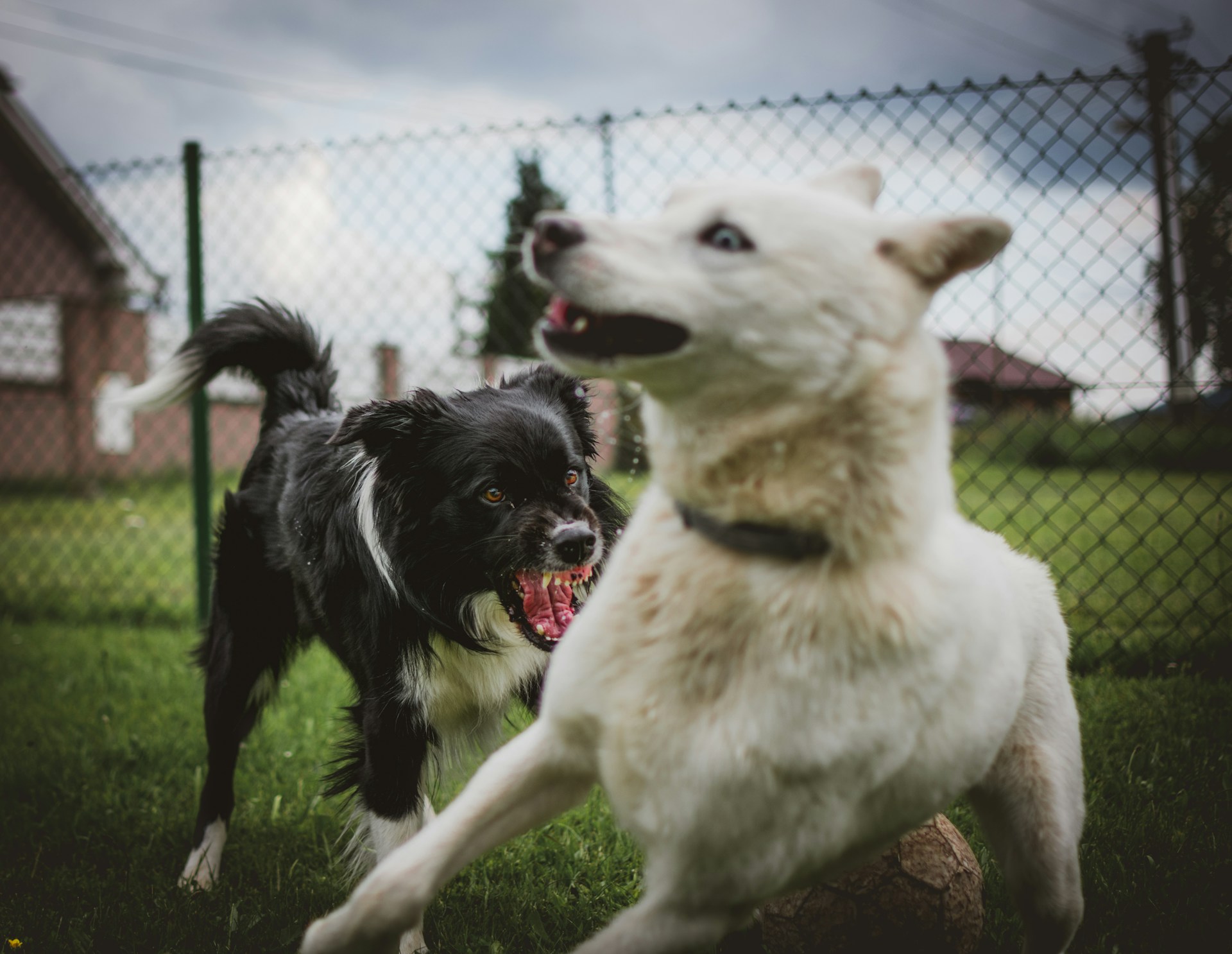
You can often spot warning signs before a bite. A stiff body, fixed stare, growling, lip lifting, raised hackles, or a tucked tail are easy to pick up before the dog lunges. Recognising these signals and giving the dog space reduces the chance of escalation. In situations involving many dogs, tension between the animals can spark fights.
Please keep in mind that some attacks are accidental. A dog startled while sleeping or nursing may bite without intending harm. In these cases, the biting is more of a reflexive action. Understanding these causes helps you avoid risky situations and respond more safely if a dog shows discomfort or aggression.
What to Do if Your Dog Is Attacked
If another dog attacks your dog, your priority is the safety of both people and animals. First, stay calm and avoid putting your hands near the dogs’ mouths. Yelling can sometimes distract them, but sudden movements may make things worse. If you can, use a barrier such as a jacket, board, leash, or any large object to separate them.
One effective method is the “wheelbarrow” technique: two people each grab the hind legs of one dog and lift, pulling them apart so the mouths release if they are locked onto each other. If you’re alone, try to get a leash or blanket around one dog’s body to create distance. Never try to pry their jaws apart with your hands. Once separated, move each dog to a secure area and keep them apart.
Check your dog for puncture wounds, deep cuts, or signs of shock, bleeding, pale gums, rapid breathing, or collapse. Even small punctures can hide serious damage and be grounds for infection, so seek veterinary care immediately. The Royal College of Veterinary Surgeons has a “Find a Vet” online tool that can help you quickly locate the nearest veterinary office in an emergency setting.
It is best to exchange contact and vaccination details with the other dog owner. If the attacking dog is loose, unvaccinated, or aggressive, report the incident to your city council and animal warden. You may also want to note the other dog’s behaviour and take photos of any injuries and the scene.
We recommend following your vet’s advice on wound care, antibiotics, and rabies risk. You may want to consider behaviour support or training to reduce future risks and help your dog recover emotionally.
What to Do if You Are Being Attacked by a Dog
If a dog attacks you, focus on protecting your vital areas and staying as calm as possible. Avoid running or screaming, as running can trigger the dog’s chase instinct. Stand still, keep your hands at your sides, and avoid eye contact. Speak in a firm, low voice to try to calm the dog. If the dog lunges, use any object you have (a bag, jacket, bicycle, or a stick) as a barrier between you and the dog to block bites.
If you’re knocked down, curl into a ball with your knees drawn to your chest and your hands over your neck and ears. It is imperative to protect your face and throat. Try to remain motionless until the dog loses interest or someone intervenes. If the dog bites you, do not yank away suddenly. The sudden movement can cause deeper tearing of the flesh. While it may seem counterintuitive, try to stay still and use your arms to shield your head. Once you can move, get to a safe place and control the bleeding by applying pressure. You may want to use a clean piece of clothing to put pressure on the wound.
Clean any wounds with soap and water and seek medical help right away. If you need medical attention but it's not a life-threatening situation, call 111. The NHS advises victims of dog attacks to avoid driving and instead ask someone else to drive them to the nearest emergency medical service. If your flesh is severely torn, it is best to call an ambulance on 111. Also, you can use 111.nhs.uk or their mobile app to call for aid.
Dog bites can cause deep tissue damage and infection, and you may need stitches, antibiotics, or a tetanus or rabies evaluation. Report the attack to local animal control so they can check the dog’s vaccination status and reduce risk to others if the dog has an owner to contact.