Our daily life involves following many rules, that are created to ensure we can live peacefully and harmoniously as a society. Many of these rules require proper documentation, which serves as proof of compliance, identity, or entitlement.
From driving licenses and passports to health records and professional certifications, documentation helps maintain order, protect rights, and facilitate smooth interactions in everyday life.
But how does documentation apply to assistance dogs? Are assistance dogs required to have identification cards just as we do? If so, what is their purpose?
Today’s article focuses on assistance dog documentation and ID cards in the UK in particular, as this is a topic that is often discussed within the UK’s assistance dog community.
What Is an Assistance Dog ID Card?
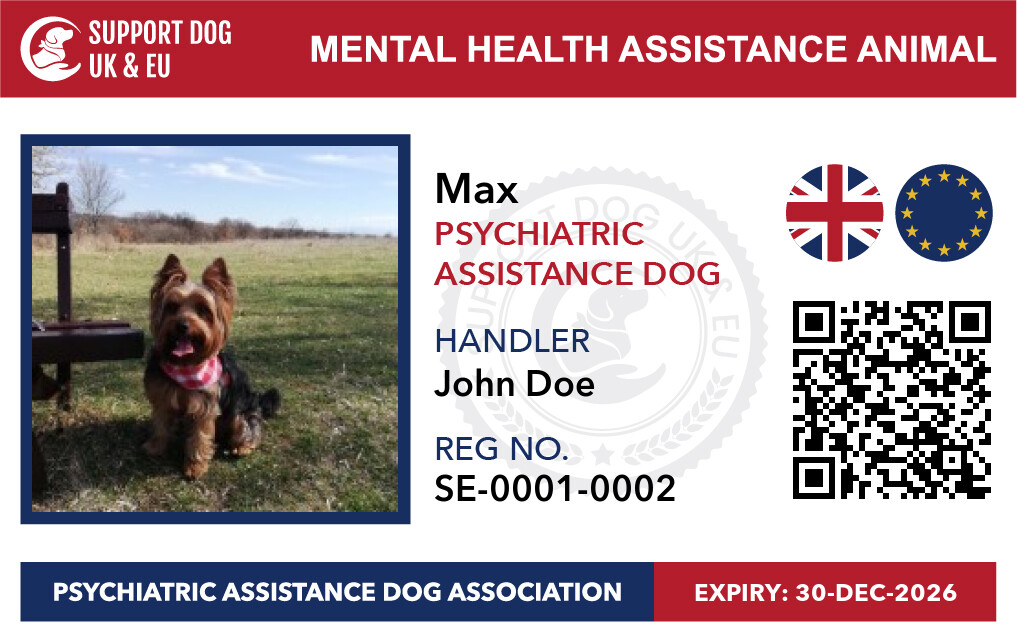
An assistance dog ID card is a document that identifies a dog as a trained assistance animal. It usually features important information about the dog and their handler, such as:
- Dog’s name, breed, and photo;
- Handler’s name;
- Issuing organization or school;
- Registration or certificate number;
- Validity dates;
- Microchip number (if any);
- Type of assistance the dog provides (e.g., mobility support, guide, psychiatric support).
However, not all ID cards include this information. Some service dog handlers/users don’t feel comfortable sharing extra details about their assistance dog, such as explaining the exact type of support the dog provides. Some organizations clarify the type of support on the ID documents they issue for assistance dogs, while others don’t.

Purpose of an Assistance Dog ID Card
Just like any documentation that serves for identification, assistance dog ID cards also have this main function:
Identification
An Assistance Dog ID card clearly indicates that the dog is a working dog, not a pet. Working dogs are typically well-trained, either by an organization, a school, or the owner themselves, to perform specific tasks that support an individual with a disability. These tasks are designed to help alleviate symptoms of various health conditions and distinguish the different types of assistance dogs.
This can include common types of assistance dogs, such as guide dogs for people with visual impairments, hearing dogs, medical alert dogs, mobility assistance dogs, and psychiatric service dogs.
Smoother
Experience in Public
While assistance dog access rights are legally protected under the Equality Act 2010, many businesses and service providers aren’t fully familiar with the law. Having an ID card on hand can help handlers confidently advocate for their right to bring their dog into public spaces where pets can be prohibited, such as restaurants, cafés, shops, hotels, grocery stores, public transportation, etc.
Addressing Safety Concerns
Assistance dogs are expected to be well-mannered in public settings, including in environments with many distractions. An ID card can greatly help ease concerns from business owners, employees, or the public who may be unsure about how assistance dogs differ from pets and how safe they are to be around.
The card, often paired with an assistance dog vest, harness, or ID tag, can additionally present a clear and professional image and help reduce misunderstandings.
Verification of the Issuing Organization / School
Many assistance dog ID cards include the issuing organisation’s contact details or a verification number. This gives businesses, transport operators, or authorities a straightforward way to confirm the dog’s status if needed.
Emergency Identification
Assistance dog ID cards, specifying the type of support the dog provides, can be extremely helpful in emergencies. If the handler begins feeling unwell in public, their assistance dog’s ID card can inform emergency medical services personnel (EMTs or paramedics) about their health and the type of assistance they need.
Are Assistance Dogs in the UK Legally Required to Have ID Cards?
No, they are not. One of the most important things to understand as an assistance dog handler is that there’s no legal requirement in the UK to hold or present an Assistance Dog ID card.
Furthermore, assistance does not need to be certified by any specific organisation to have legal protection as an assistance dog.
Under the Equality Act 2010, a disabled person has the right to access public places, housing, and transportation with their assistance dog, provided the dog is trained to assist with their disability and behaves appropriately in public.
“Some, but not all, assistance dog users will carry an ID book giving information about the assistance dog and the training organisation (if applicable), together with other useful information. Again, this is not a legal requirement and assistance dog users should not be refused a service simply because they do not have an ID book.”
In other words, the rights of assistance dog teams do not depend on ID documents but on the individual’s eligibility for an assistance dog and the dog’s training and behavior.

Why People Still Choose to Get Assistance Dog ID Cards?
Although they aren’t legally required, many handlers choose to carry an Assistance Dog ID card for practical reasons, such as:
Making Public
Access and Experience Smoother
Staff in shops, restaurants, hotels, and transport sometimes ask for “proof” of an assistance dog status. An ID card can help reduce awkward conversations and refusals. It provides a clear verification that the dog is trained to assist someone with a disability, which often helps staff feel more confident about allowing them access.
Carrying a card can also save time and prevent unnecessary stress when entering busy public spaces.
Avoiding Discrimination
Some businesses aren’t fully aware of the law and may ask for documentation that verifies a dog’s status as an assistance dog. Presenting an ID card often helps accelerate the process and prevent potential conflicts or misunderstandings.
It also serves as a visual reminder to staff that the handler has the right to be accompanied by their dog as an assistance animal. This fosters smoother interactions and reduces the likelihood of discriminatory behavior.
Emergency Identification
If you become unwell in public, an ID card can help alert passersby or medical responders to your condition, medical needs, and your dog’s role.
The card can also include emergency contact details, legal guardian information, or instructions on the type of support your dog provides if you are temporarily unable to do so yourself.
In some situations, this information can be crucial, even life-saving, especially during emergencies when you’re unable to communicate.
Travel Convenience
Many airlines, hotels, and public transport services may ask for documentation, even though it’s not required by UK law. However, it’s important to note that visiting public places with an assistance dog and flying with one, especially internationally, are often regulated differently.
Airlines and carriers enforce their own policies, which should be reviewed on their websites. If you plan to travel with your assistance dog, it’s important to contact the airline in advance to ensure compliance with its regulations for the specific itinerary. In some cases, medical documentation issued by a licensed health professional and advance notice (usually 48 to 72 hours before departure) are required.
Some airlines require ID documents issued by organizations like Assistance Dogs International (ADI) or the International Guide Dog Federation (IGDF). If you have not heard of them, these are umbrella terms for non-profit organizations and charities that set assistance/service dog training standards. While they provide their own trained dogs, some member organizations may be willing to evaluate already trained pet dogs, although this is rare.
How to Get an Assistance Dog ID Card?
While Assistance Dog ID cards are not legally required, many handlers find them useful for easing access and reducing misunderstandings in public spaces. If you choose to obtain one, you have several options to consider:
Through an Accredited Organisation
If your dog was trained by an accredited assistance dog organisation like ADI or IGDF, you may be able to receive an official ID card directly from them.
These cards often include the organisation’s logo, contact details, and information verifying your dog’s training and role. This type of card can carry significant credibility when interacting with businesses or public services.
However, as mentioned earlier, ADI and IGDF provide their own trained dogs, so you need to look for their member organizations that specifically offer the option to work with clients’ pet dogs.
If you consider this option, visit their Member-Search page. Use "Advanced filtering options" and put a check in the box "Will consider working with an owner and their personal dog" to refine your search.
From a Legitimate Independent Provider (Stay Cautious of Scams)
People who have trained their own dogs can often purchase ID cards from legitimate independent providers. These cards
are typically designed to look professional and serve as a clear
visual indicator that the dog is a working dog, not a pet, and
trained to perform specific tasks.
Choosing a legitimate provider ensures the card is durable, legible, and widely accepted in everyday situations. However, it’s important to do your research carefully before purchasing ID documents. Review the information on the website thoroughly, including the Terms & Conditions, customer support options, and refund policies. Legitimate websites provide clear information, including their address and policies, and offer reliable support in a timely manner.
You should also be cautious of phrases like “government-approved,” which are misleading and indicate that the site is not legitimate. There is no government-approved database for assistance dogs in the UK.
Pairing the ID Card with Other Types of Identification Gear
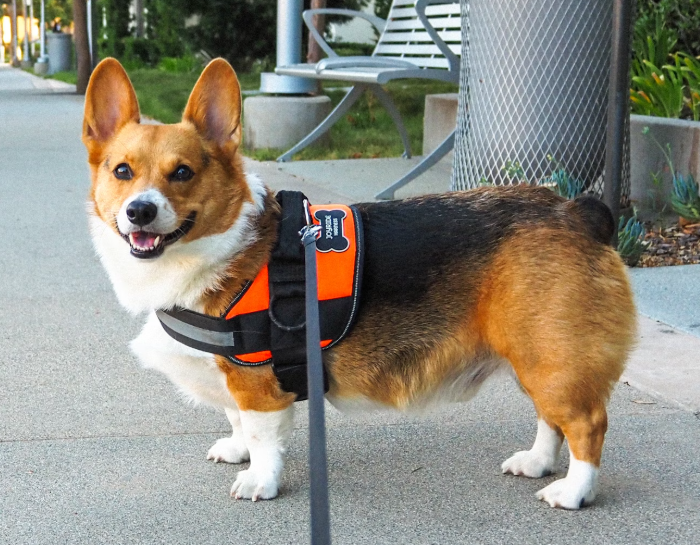
To ensure maximum clarity and recognition, many handlers choose to pair their assistance dog’s ID card with other types of identification gear, such as a vest, harness patch, ID tag, or leash. This combination can be particularly helpful in public, as it provides multiple visual cues that immediately communicate the dog’s role to the public and business owners.
Equipping assistance dogs with multiple forms of identification can help reduce misunderstandings, prevent unnecessary challenges, and minimize unpleasant interactions in public spaces. For example, a clearly labeled vest or harness patch can alert people that the dog is currently ‘on duty’ and should not be distracted.
By using several complementary identification items, handlers ensure that their dog’s status as an assistance animal is communicated consistently and professionally.
Tips for Assistance Dog Handlers
Carrying an Assistance Dog ID card is just one tool to make life with your assistance dog easier.
Effectively handling the dog, ensuring they are properly trained and on their best behavior in public, is even more important. Always keep your dog well-groomed and in good health, as a tidy, calm appearance helps reinforce their professional role.
Keep their skills up-to-date, especially in public settings, and ensure your dog remains focused, calm, and responsive in busy environments. When entering new places, present your ID card politely and confidently, and be prepared to answer basic questions about your dog’s role if staff are unsure.
Remember that employees are not allowed to ask you private questions, especially disability-related ones. However, try being polite and understanding, while advocating for your rights, in case they are not familiar with the law.
Pair the card with a clearly visible vest, harness, ID tag, or leash to signal that your dog is a working dog, not a pet. Finally, stay patient and respectful in interactions, as clear communication and professionalism often make access smoother for both you and your dog.
If you feel you and your assistance dog are being discriminated against, consider seeking legal advice through UK organizations, such as the Equality Advisory Support Service (EAAS), Disability Rights UK, or Disability Law Service.